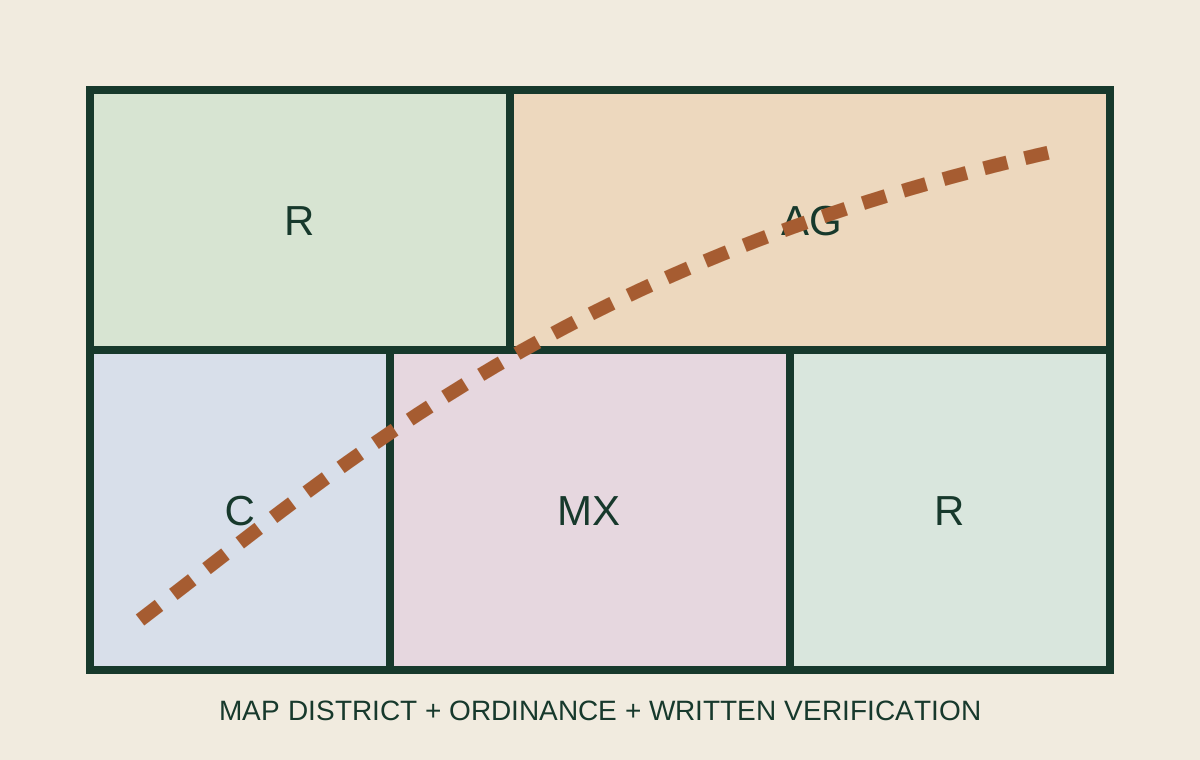
Zoning and buildability

Deed Restrictions and Property Owners Association Rules

Private restrictions can be more limiting than zoning and may control homes, rentals, animals, businesses, design, access and maintenance.

Direct answer

Check private covenants, architectural rules, assessments and enforcement before buying land. Start by resolving obtain declarations and all amendments, preserve recorded declarations and amendments in the parcel file, and escalate any rules supplied only by the listing agent before the purchase deadline.

This is a US-wide research framework. The controlling rule, record, professional standard and approval process can change by state, county, city and project.

What this due-diligence check covers

Restrictions may appear in declarations, deeds, plats, amendments, bylaws and rules. Review the full current set and determine whether the parcel is subject to them.

Government approval does not override enforceable private restrictions.

Why it matters before closing

A project can satisfy zoning but still be prohibited by minimum-square-foot rules, manufactured-home bans, design review or subdivision covenants.

Three levels of evidence

Evidence level

First question to resolve

Obtain declarations and all amendments.

Evidence level

Proof to keep

Preserve recorded declarations and amendments and connect it to the exact parcel, proposed use and source date.

Evidence level

Escalation trigger

Rules supplied only by the listing agent. Ask: Is the parcel legally subject to the declaration?

What to verify

  • Obtain declarations and all amendments.
  • Confirm association status, dues and assessments.
  • Review architectural approval and construction deadlines.
  • Check enforcement history and pending changes.

Red flags that deserve follow-up

  • Rules supplied only by the listing agent.
  • Expired-looking covenants with automatic renewal clauses.
  • Unpaid assessments or special road charges.
  • Approval required before plans are complete.

Evidence to keep in the parcel file

  • Recorded declarations and amendments
  • Bylaws and current rules
  • Resale or disclosure package
  • Written association account status

Evidence matrix

Turn every conclusion into a record and verifier.

Decision questionEvidence to collectWho or what verifies it
Obtain declarations and all amendments.Recorded declarations and amendmentsIs the parcel legally subject to the declaration
Confirm association status, dues and assessments.Bylaws and current rulesWhat dues and special assessments apply
Review architectural approval and construction deadlines.Resale or disclosure packageAre short-term rentals or businesses restricted
Check enforcement history and pending changes.Written association account statusWhat design approvals are required

Questions to ask before the deadline

  1. Is the parcel legally subject to the declaration?
  2. What dues and special assessments apply?
  3. Are short-term rentals or businesses restricted?
  4. What design approvals are required?
  5. Are roads or utilities association-owned?

What this evidence does not prove

Public records and online tools can identify risk, but they do not replace the controlling document, written agency decision, title review, survey, engineering or environmental work required for the actual parcel and project.

Primary-source starting points

Open the records behind the research.

Sources are selected for the topic, but the applicable local authority and parcel-specific evidence remain controlling.

Put the guide to work

Turn the guide into a parcel-specific due-diligence list.

Frequently asked

Questions land buyers ask

Can a POA stop something zoning allows?

Potentially, if enforceable private covenants prohibit it.

Do old covenants still apply?

They may. Review expiration, renewal, amendment and state-law issues with qualified counsel.

Are voluntary associations harmless?

Even without mandatory membership, recorded restrictions or road obligations may still bind the land.