Zoning and buildability

How to Verify Zoning for Vacant Land

Zoning verification is not complete when a listing states “residential” or a map shows a color. The controlling code, parcel status and proposed use must match.

Direct answer

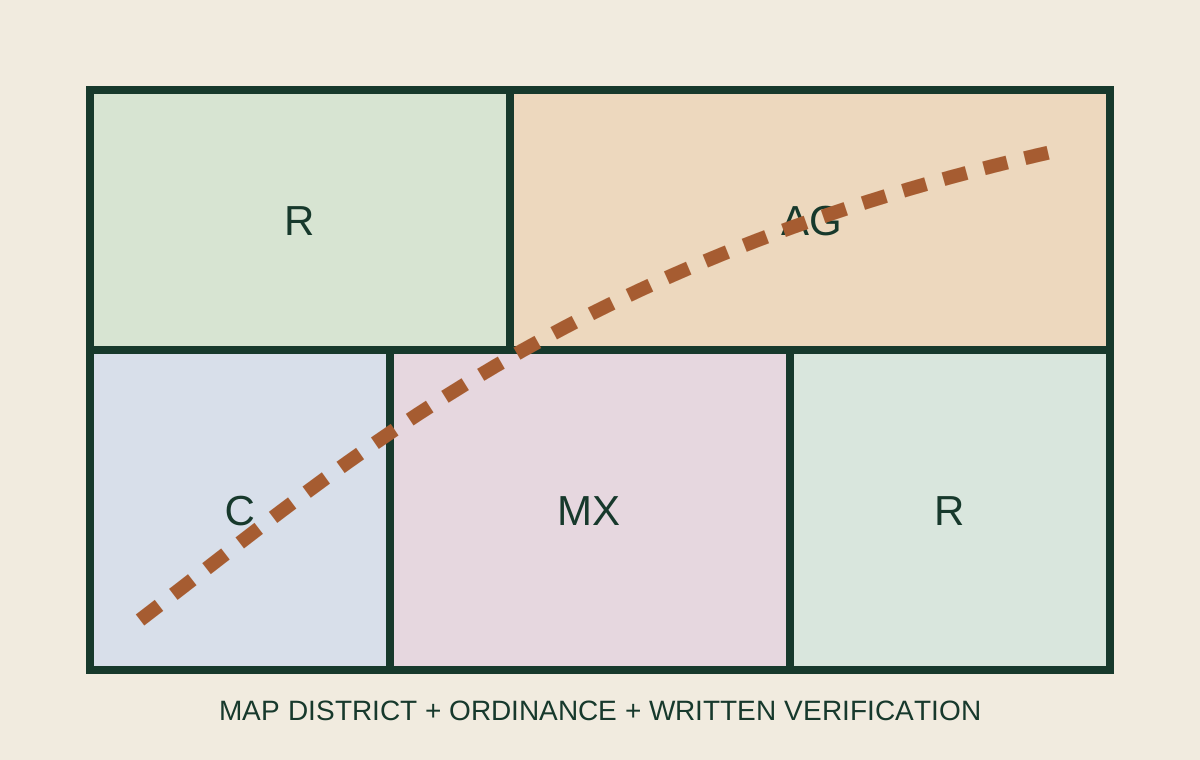
Verify zoning by identifying the controlling jurisdiction, confirming the current district and overlays, reading the use table and definitions, and obtaining written guidance for the exact project.

This is a US-wide research framework. The controlling rule, record, professional standard and approval process can change by state, county, city and project.

What this due-diligence check covers

Start by identifying the city, county, township, special district or overlay with authority. Then obtain the district, use table and dimensional standards.

Ask the authority about the exact project, including dwelling type, occupancy, animals, business activity and accessory structures.

Why it matters before closing

Zoning can affect whether the project is permitted by right, needs discretionary approval or is prohibited, and it can change the amount of usable land.

Three levels of evidence

Evidence level

First question to resolve

Confirm jurisdiction in writing.

Evidence level

Proof to keep

Preserve written zoning confirmation and connect it to the exact parcel, proposed use and source date.

Evidence level

Escalation trigger

Seller says “unrestricted” without authority confirmation. Ask: Which agency controls this parcel?

What to verify

  • Confirm jurisdiction in writing.
  • Obtain the current zoning map and code section.
  • Check allowed, conditional and prohibited uses.
  • Review overlays, lot status and nonconformity issues.

Red flags that deserve follow-up

  • Seller says “unrestricted” without authority confirmation.
  • Parcel split created a lot below minimum standards.
  • Use allowed only through a discretionary permit.
  • Overlay district adds separate requirements.

Evidence to keep in the parcel file

  • Written zoning confirmation
  • Map and code excerpts
  • Pre-application notes
  • Recorded restrictions reviewed separately

Evidence matrix

Turn every conclusion into a record and verifier.

Decision questionEvidence to collectWho or what verifies it
Confirm jurisdiction in writing.Written zoning confirmationWhich agency controls this parcel
Obtain the current zoning map and code section.Map and code excerptsIs my exact use permitted by right
Check allowed, conditional and prohibited uses.Pre-application notesWhat lot and setback standards apply
Review overlays, lot status and nonconformity issues.Recorded restrictions reviewed separatelyAre there overlays or special districts

Questions to ask before the deadline

  1. Which agency controls this parcel?
  2. Is my exact use permitted by right?
  3. What lot and setback standards apply?
  4. Are there overlays or special districts?
  5. Is the parcel a legal lot of record?

What this evidence does not prove

Public records and online tools can identify risk, but they do not replace the controlling document, written agency decision, title review, survey, engineering or environmental work required for the actual parcel and project.

Primary-source starting points

Open the records behind the research.

Sources are selected for the topic, but the applicable local authority and parcel-specific evidence remain controlling.

Put the guide to work

Turn the guide into a parcel-specific due-diligence list.

Frequently asked

Questions land buyers ask

Can zoning change after I buy?

Yes, through public processes. Buyers should understand current rules and nearby planning, but no one can guarantee future zoning.

Does no county zoning mean no restrictions?

No. Subdivision rules, health permits, floodplain rules, building codes, deed restrictions and other requirements may still apply.

Is a zoning letter worth getting?

For high-impact questions, written confirmation can create a clearer evidence file than a verbal conversation.