
Preliminary buildability screen
Can you build on the land? Test the six gates before you assume yes.
Organize the legal, access, water, wastewater, utility and physical-site questions that determine whether the intended project has a realistic approval path.
Project
Question 1 of 9What do you want to place or build?
Result language
Why the result is not simply buildable or unbuildable
A responsible authority interprets the code, qualified professionals define physical constraints and the permit process evaluates plans that may not exist yet. Landeia therefore separates supported facts, verification needs and potential blockers.
Buildability evidence
Each gate needs a record and a responsible verifier.
| Decision question | Evidence to collect | Who or what verifies it |
|---|---|---|
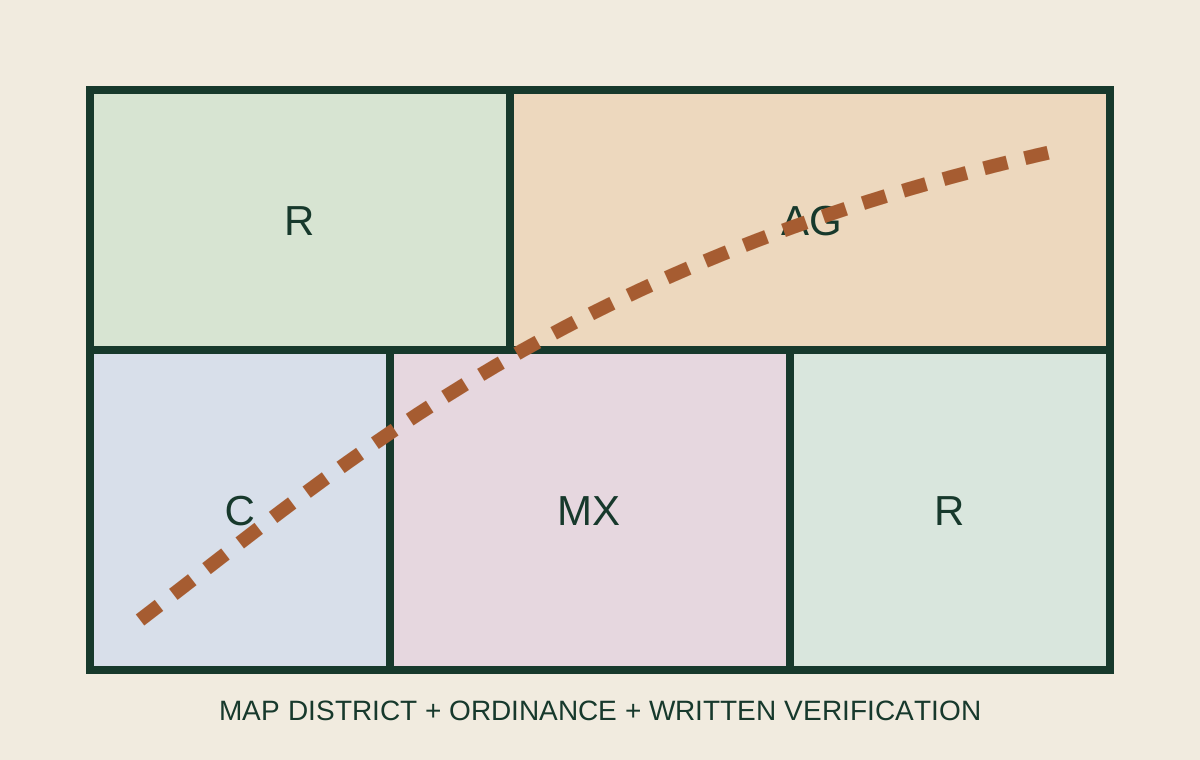
| Is the proposed use allowed? | Jurisdiction, zoning district, overlays, use table and written project description | Planning or zoning authority |
| Is the parcel a legal buildable lot? | Creation history, plat or deed, lot status, area, frontage and setbacks | Planning authority, title and survey |
| Can the project reach a public road? | Recorded access, survey route, driveway approval and emergency access | Title, survey and road authority |
| Can the project obtain water? | Provider serviceability or well feasibility, rights, permit and cost | Provider, water authority or qualified well professionals |
| Can wastewater be approved? | Sewer service or soil/site evaluation with primary and replacement areas | Health or environmental authority and qualified professional |
| Does a usable footprint remain? | Surveyed constraints, setbacks, easements, flood, wetlands, slope, drainage and site plan | Surveyor, engineer, environmental and planning professionals |
Test the complete footprint, not only the house pad.
The project footprint can include the home, driveway, parking, grading, stormwater, well, septic and replacement area, electric route, accessory structures, fire access and construction disturbance. A parcel can contain enough total acreage but still lack one connected, legally usable area for the full plan.
Sequence the investigation.
Resolve allowed use, legal access and lot status before detailed engineering. Then test water, wastewater and the broad site envelope. Use the resulting constraints to scope a survey, concept plan, engineering, environmental work and cost budget.
Frequently asked
Land buildability questions
What makes land buildable?
Buildability usually depends on allowed use, legal lot status, frontage and setbacks, legal and physical access, a usable building envelope, water, wastewater, utilities, restrictions, site conditions and required approvals.
Can an online zoning map prove I can build?
No. Confirm the controlling jurisdiction, current code, district, overlays, lot standards, intended use and approval path with the responsible authority.
Can land be buildable if it fails a perc test?
Possibly, if sewer or another approved wastewater solution is available. The allowed alternative, usable area and cost require local and site-specific verification.
Does this checker issue a buildability report?
It provides a preliminary screen based on your answers. It is not a permit decision, zoning verification, septic approval, survey, engineering study or environmental determination.
Next step