
What this due-diligence check covers
A recorded access easement answers who may use the route. A maintenance agreement should explain how work is approved, costs are divided and nonpayment is handled.
Informal neighbor cooperation can change after a sale, storm or expensive repair.
Why it matters before closing
Lenders, insurers and future buyers may question a private road when maintenance duties are uncertain or the route does not meet emergency and construction needs.
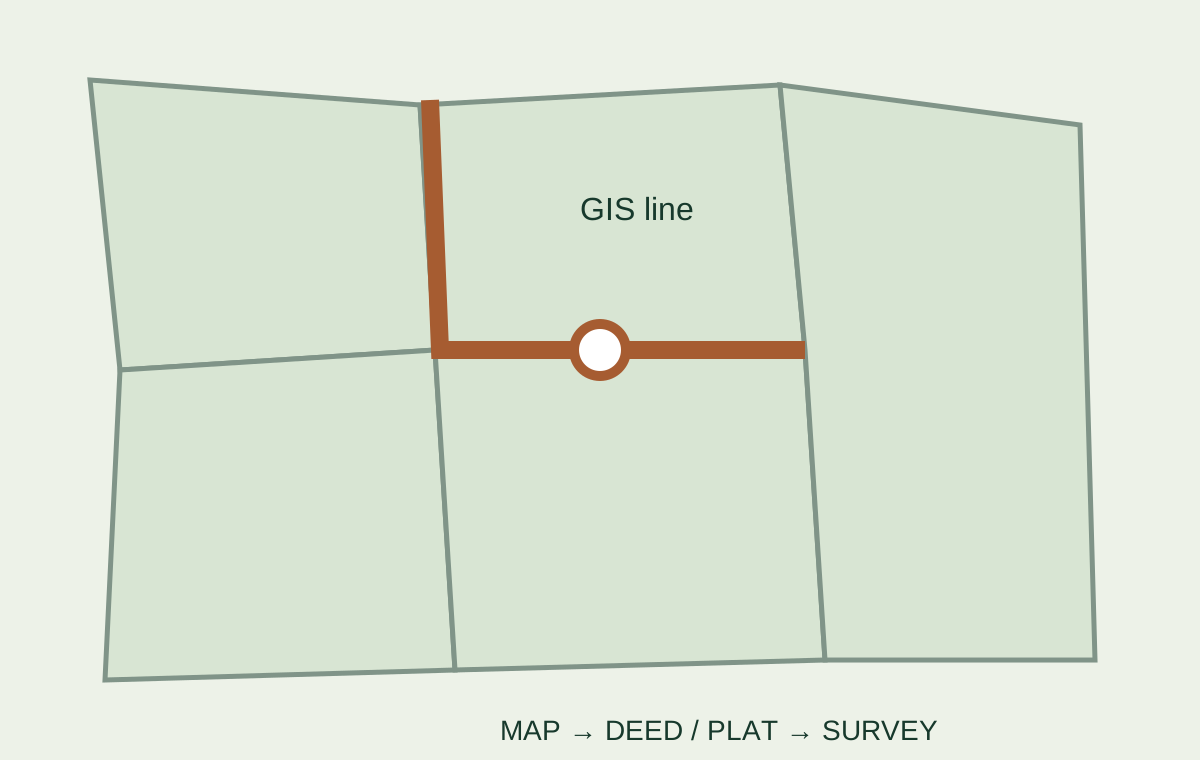
Three levels of evidence
First question to resolve
Obtain every recorded access and maintenance document.
Proof to keep
Preserve recorded easement and connect it to the exact parcel, proposed use and source date.
Escalation trigger
No written cost-sharing method. Ask: How are routine and emergency costs divided?
What to verify
- Obtain every recorded access and maintenance document.
- Inspect road surface, drainage, culverts, bridges and snow or storm exposure.
- Estimate near-term upgrades and recurring work.
- Confirm whether the agreement binds future owners.
Red flags that deserve follow-up
- No written cost-sharing method.
- One owner controls gates or access decisions.
- A failing bridge with no reserve or repair plan.
- Road width or grade below local emergency standards.
Evidence to keep in the parcel file
- Recorded easement
- Recorded maintenance agreement
- Current condition photos and contractor estimate
- Owner payment history if available