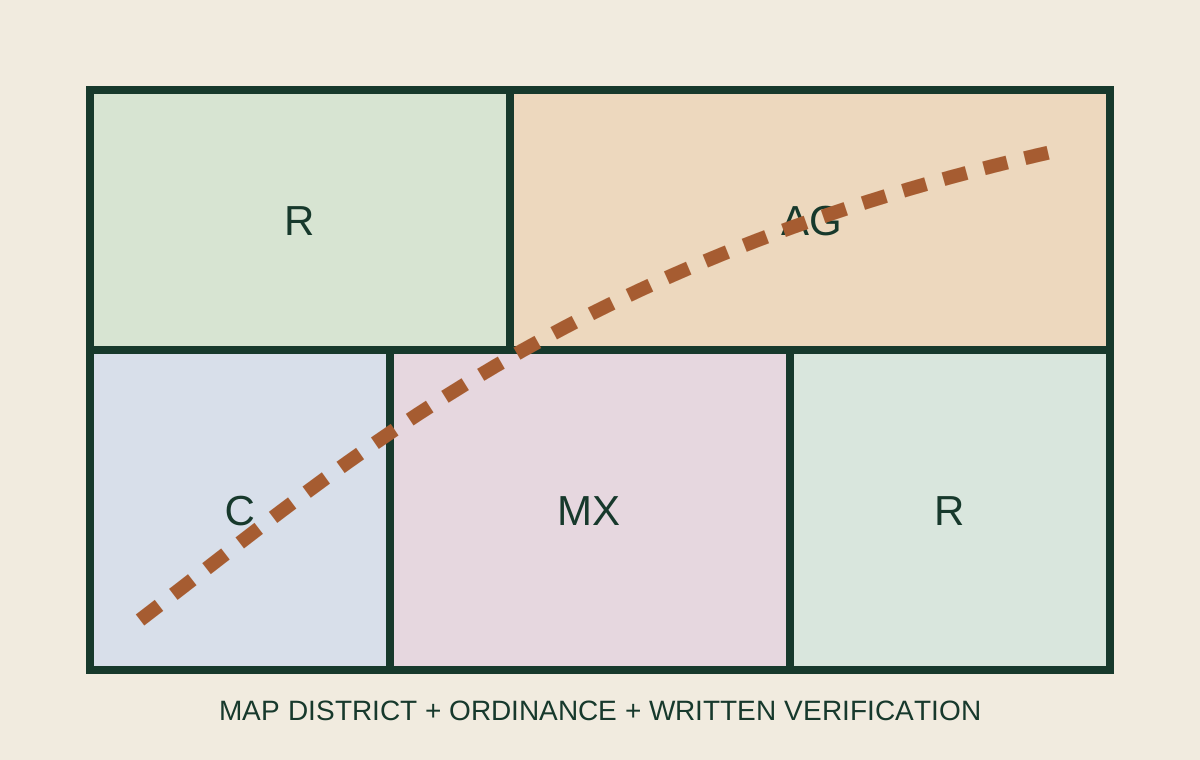
Zoning and buildability

Land Requirements for a Manufactured Home

A HUD-code home still needs a legally suitable site and compliant installation under state and local rules.

Direct answer

Verify zoning, foundation, access, utilities, septic, installation and title requirements before buying land for a manufactured home. Start by resolving verify local placement and zoning rules, preserve written zoning confirmation in the parcel file, and escalate any listing says “mobile homes allowed” without written confirmation before the purchase deadline.

This is a US-wide research framework. The controlling rule, record, professional standard and approval process can change by state, county, city and project.

What this due-diligence check covers

Confirm that the exact home type, age, dimensions and occupancy are allowed. Distinguish manufactured, modular and mobile-home terminology in the local code.

Site work can include foundation, transport access, setup, utility connections, drainage, skirting and permits.

Why it matters before closing

Cheap land can become unsuitable when roads cannot handle delivery, septic capacity is limited or private restrictions prohibit the home.

Three levels of evidence

Evidence level

First question to resolve

Verify local placement and zoning rules.

Evidence level

Proof to keep

Preserve written zoning confirmation and connect it to the exact parcel, proposed use and source date.

Evidence level

Escalation trigger

Listing says “mobile homes allowed” without written confirmation. Ask: Is this exact home type and age allowed?

What to verify

  • Verify local placement and zoning rules.
  • Confirm delivery route, turning radius and bridge limits.
  • Price foundation and installation requirements.
  • Coordinate water, wastewater, electric and permits.

Red flags that deserve follow-up

  • Listing says “mobile homes allowed” without written confirmation.
  • Covenants prohibit factory-built homes.
  • Road curves or overhead lines block delivery.
  • Used home lacks required labels or relocation eligibility.

Evidence to keep in the parcel file

  • Written zoning confirmation
  • Home specification and installation manual
  • Site and delivery plan
  • Utility and septic approvals

Evidence matrix

Turn every conclusion into a record and verifier.

Decision questionEvidence to collectWho or what verifies it
Verify local placement and zoning rules.Written zoning confirmationIs this exact home type and age allowed
Confirm delivery route, turning radius and bridge limits.Home specification and installation manualWhat foundation standard applies
Price foundation and installation requirements.Site and delivery planCan the delivery vehicle reach the pad
Coordinate water, wastewater, electric and permits.Utility and septic approvalsHow is the home titled after installation

Questions to ask before the deadline

  1. Is this exact home type and age allowed?
  2. What foundation standard applies?
  3. Can the delivery vehicle reach the pad?
  4. How is the home titled after installation?
  5. What inspections are required?

What this evidence does not prove

Public records and online tools can identify risk, but they do not replace the controlling document, written agency decision, title review, survey, engineering or environmental work required for the actual parcel and project.

Put the guide to work

Turn the guide into a parcel-specific due-diligence list.

Frequently asked

Questions land buyers ask

Does the HUD label guarantee local approval?

No. It addresses federal construction standards, while placement, installation and land use remain subject to applicable local and state rules.

Is a modular home the same as a manufactured home?

No. They are built under different codes and may be treated differently by zoning and lenders.

Can I place a used manufactured home anywhere it is allowed?

Not necessarily; age, relocation, installation and documentation rules may apply.