
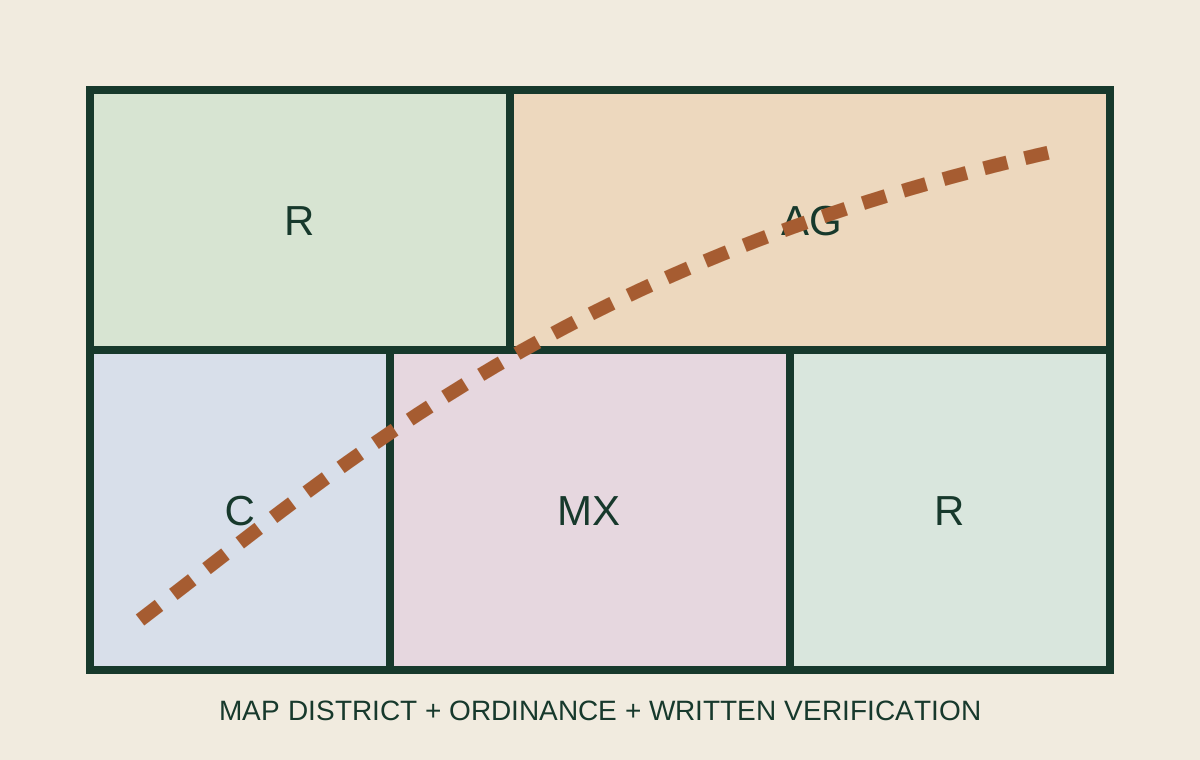
What this due-diligence check covers
Rules may control parent-tract history, minimum area, frontage, road construction, utilities, open space, stormwater and plat approval.
A concept that works mathematically may fail because of access, soils, water or infrastructure.
Why it matters before closing
Entitlement and improvement costs can exceed the land price, and approval may require time, bonds, professional design and public dedication.
Three levels of evidence
First question to resolve
Confirm subdivision jurisdiction and definition.
Proof to keep
Preserve boundary and topographic survey and connect it to the exact parcel, proposed use and source date.
Escalation trigger
Prior unapproved divisions. Ask: How is subdivision defined here?
What to verify
- Confirm subdivision jurisdiction and definition.
- Prepare a yield concept using actual constraints.
- Review water, wastewater and road standards.
- Estimate design, construction, review and carrying cost.
Red flags that deserve follow-up
- Prior unapproved divisions.
- No public or compliant private road access.
- Lots depend on unverified septic areas.
- Utility capacity or fire-flow unavailable.
Evidence to keep in the parcel file
- Boundary and topographic survey
- Concept plan and yield table
- Agency pre-application notes
- Infrastructure cost estimate